
Most people look at a concrete slab and see concrete.
A contractor working on a post-tensioned structure sees something very different.
Inside that slab may be a network of high-strength steel tendons that were tensioned during construction and remain an integral part of how the structure carries loads today.
For building owners, condominium boards and property managers, understanding that distinction becomes especially important when a building begins to require restoration.
Why put steel under tension inside concrete?
Concrete is exceptionally strong in compression, but relatively weak in tension. Post-tensioning takes advantage of that difference.
High-strength steel tendons are installed within the concrete and tensioned after the concrete reaches the required strength. That tension places the concrete into compression and allows engineers to design efficient structural systems with:
Longer spans
Thinner slabs
Fewer supporting elements
The result can look deceptively simple. A concrete slab.
But structurally, there is much more happening inside it.
Those tendons remain part of the structure
This is one of the most important things to understand about post-tensioned buildings.
The tendons aren’t leftover components from the construction process.
They are actively contributing to the structural system.
That changes the way restoration work must be approached.
Cutting into an ordinary-looking concrete slab without understanding what is embedded inside it can damage a tendon.
Existing tendons can also be affected by:
And because much of the system is embedded within concrete, the complete condition may not be obvious from the surface.
When deterioration reaches the tendon
South Florida presents a particularly demanding environment for reinforced and prestressed concrete.
Moisture, wind-driven rain and coastal chlorides can penetrate vulnerable areas when waterproofing, sealants or other protective systems deteriorate.
If corrosion develops in conventional reinforcing steel, concrete restoration is already a specialized process.
When deterioration involves a post-tensioning tendon, another level of consideration is introduced. These are high-strength steel components that have been intentionally stressed.
That means evaluating and repairing them requires an understanding of both the deterioration and the forces involved.
Depending on the condition and the engineer’s repair design, the work may involve:
Locating the affected tendon
Carefully exposing it
Evaluating the surrounding concrete and anchorage
Repairing or replacing components
Restoring corrosion protection
Stressing the repaired system
Reinstating the concrete
It is not simply a matter of exposing steel and patching the opening.
This is what specialized restoration looks like
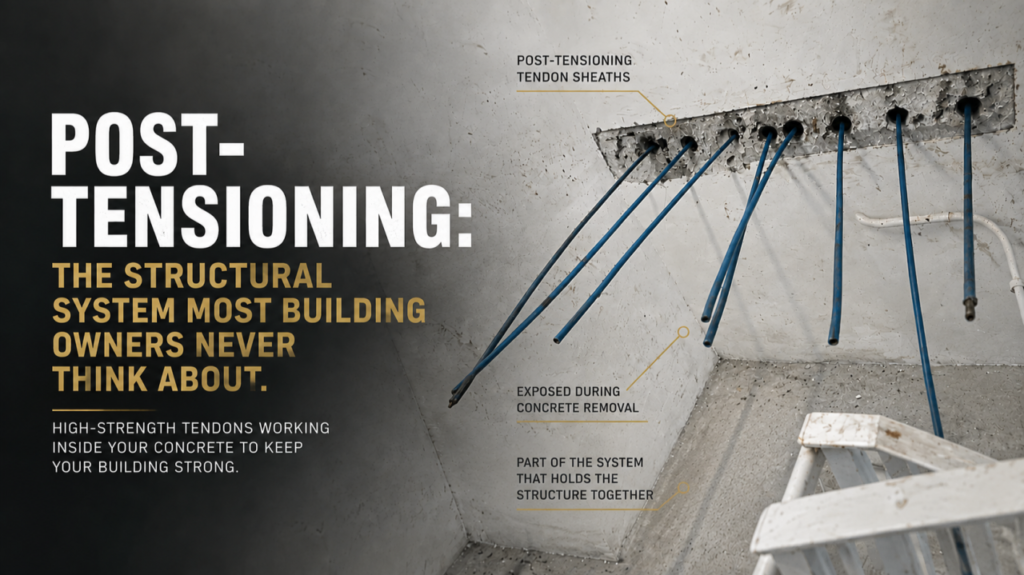
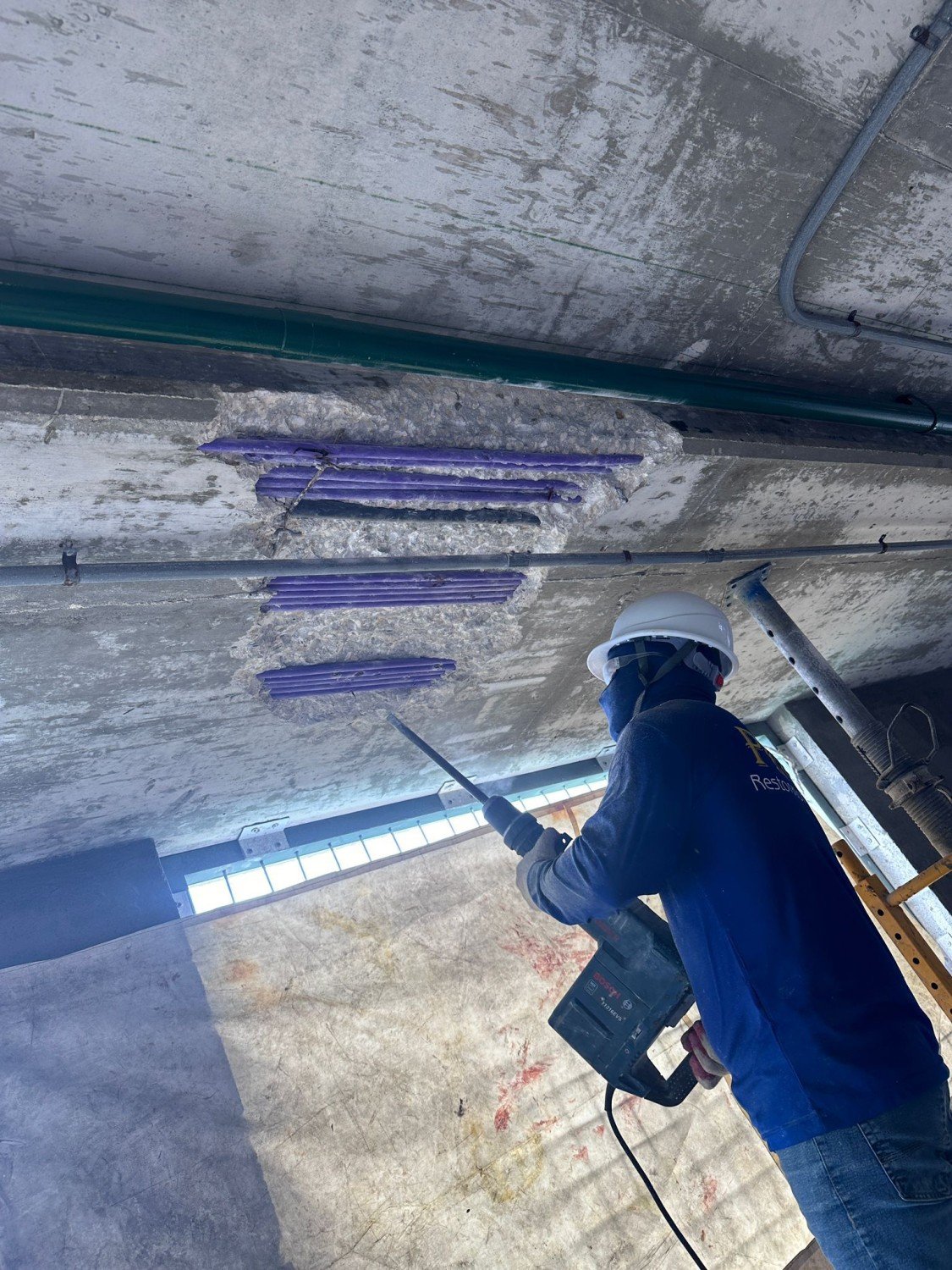
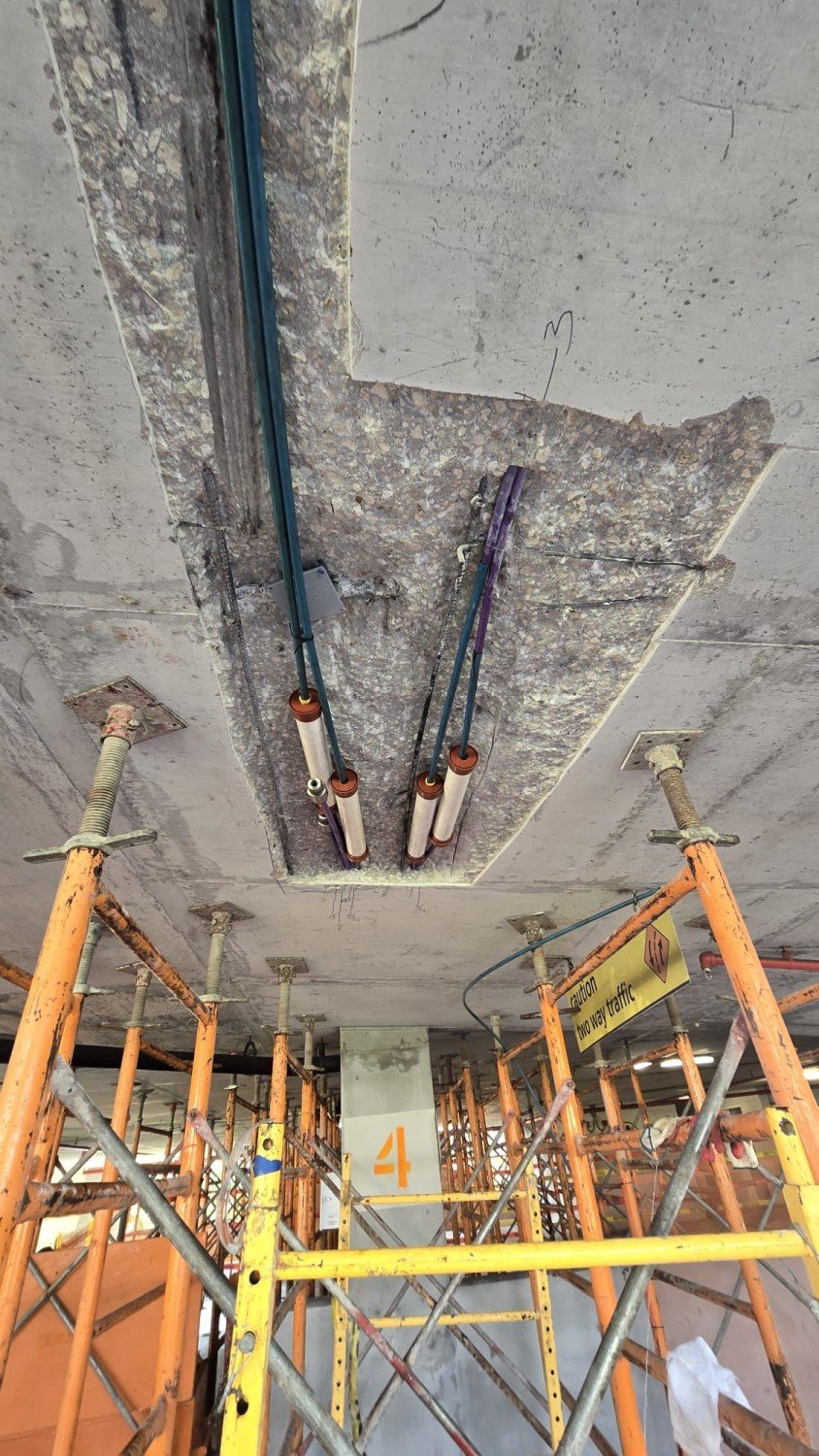
The photograph accompanying this article shows something building occupants would normally never see: post-tensioning tendons exposed during restoration work.
Once the concrete has been carefully removed, the hidden structural system becomes visible. At this stage:
Sequencing matters.
Access matters.
Engineering matters.
Component condition matters.
Repair methodology matters.
Every opening into an existing structure reveals information that has to be understood before the next step is taken.
That is one of the fundamental differences between cosmetic concrete work and structural restoration.
The building rarely gives you the entire answer at once
Existing buildings come with history.
What an existing building may be hiding
Good restoration work therefore requires something more than the ability to rebuild concrete.
It requires the ability to respond intelligently to what the structure reveals. That is especially true with post-tensioning.
The objective isn’t simply to make the repaired area look whole again.
The objective is to understand the structural system you’re working with, execute the engineered repair correctly and restore the protection that system needs for the future.
Concrete may be what you see. The system is what matters.
Buildings are assemblies of interconnected systems.
Post-tensioning is a particularly good example because so much of its work happens quietly inside the concrete.
Most residents will never see a tendon. Most will never see an anchorage. They shouldn’t have to.
But when those components require investigation or repair, the people performing that work need to understand exactly what they’re dealing with.
Structural restoration isn’t about repairing a surface.
It’s about restoring the system behind it.
Dealing with a post-tensioned structure?
Group Landev performs specialized concrete restoration and post-tensioning repairs throughout South Florida, working with engineers, property managers and condominium associations to execute complex structural repairs in existing buildings.
Talk to our teamThis article was originally published on LinkedIn.