
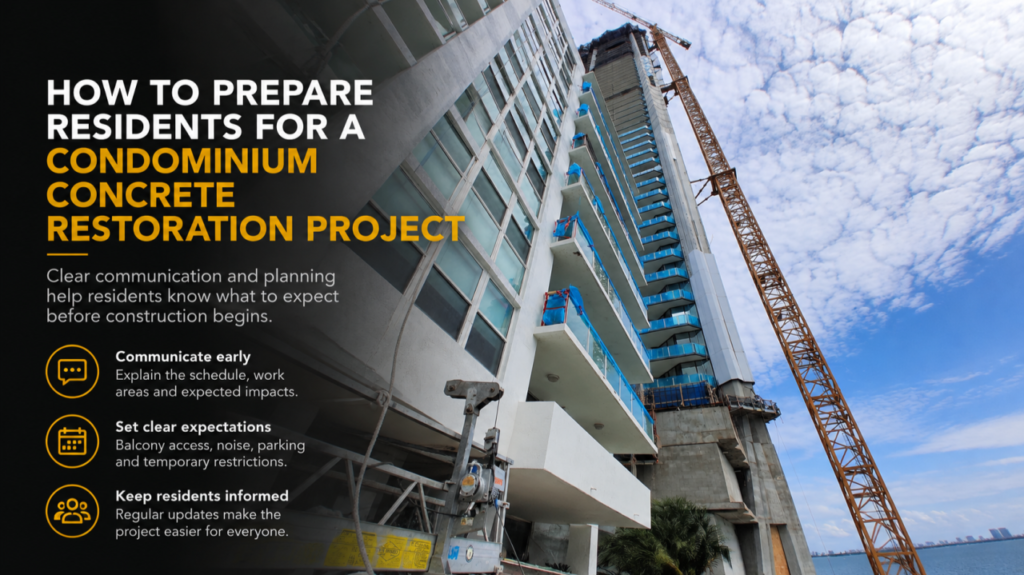
A condominium board approves a concrete restoration project.
The contractor is selected. The scope of work is established. Construction is approaching.
But before the first crew arrives, there is another important step:
Making sure residents know what is about to happen.
For condominium associations and property managers in South Florida, preparing residents is an important part of managing a major restoration project.
Start communicating before construction begins
Residents should not discover that their balcony is closing when workers arrive outside their windows.
Before work begins, the property management team should communicate the expected schedule, affected areas, construction hours and temporary restrictions.
The information does not need to be complicated. Residents primarily want to know three things:
What will happen
When it will happen
How it will affect them
Explain how the work will progress
Large condominium concrete restoration projects are often divided into phases.
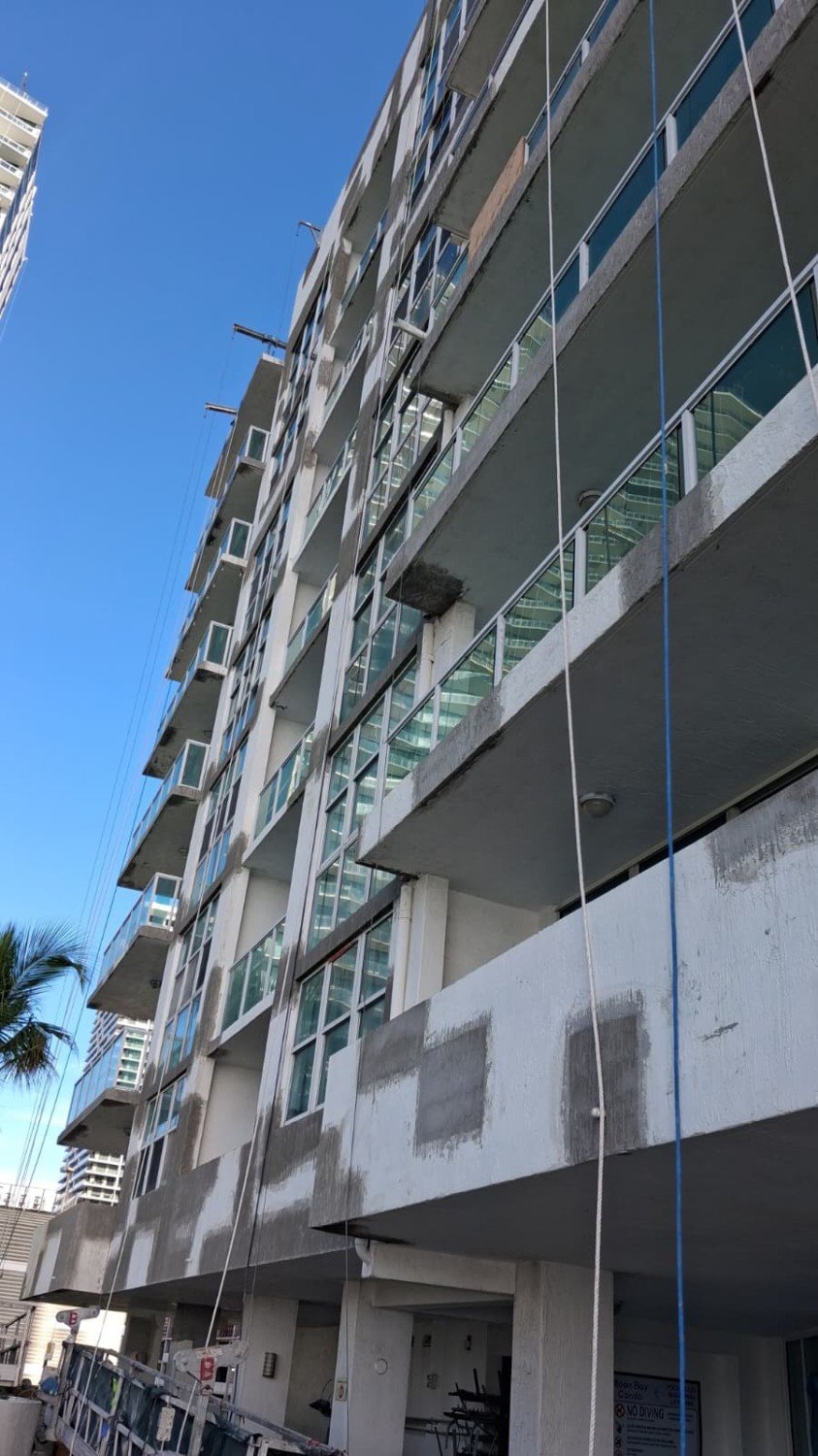
A contractor may begin with one section of a parking garage, move to another area, or perform balcony repairs on different sections of the building.
Explaining this sequence helps residents understand why some areas are closed while others remain accessible.
A clear construction schedule helps residents plan around the work.
However, schedules should also account for weather, inspections and unexpected structural conditions that may affect progress.
Prepare residents for temporary restrictions
Depending on the scope of work, concrete restoration may involve:
Temporary restrictions to expect
Some restrictions may last longer than others.
The important thing is to explain them before they become a source of frustration.
Give residents one clear point of contact
When residents have questions, they should know whom to contact.
Property management can establish a communication process with the concrete restoration contractor for construction updates, access requests and reported concerns.
This also helps avoid conflicting information coming from different people involved in the project.
Consistent communication is especially important when schedules change.
Keep residents informed as construction progresses
An initial notice is useful, but it is rarely enough for a project lasting several months.
Regular updates can explain which areas have been completed, where crews will work next and whether upcoming restrictions have changed.
A restoration project involves more than the structure
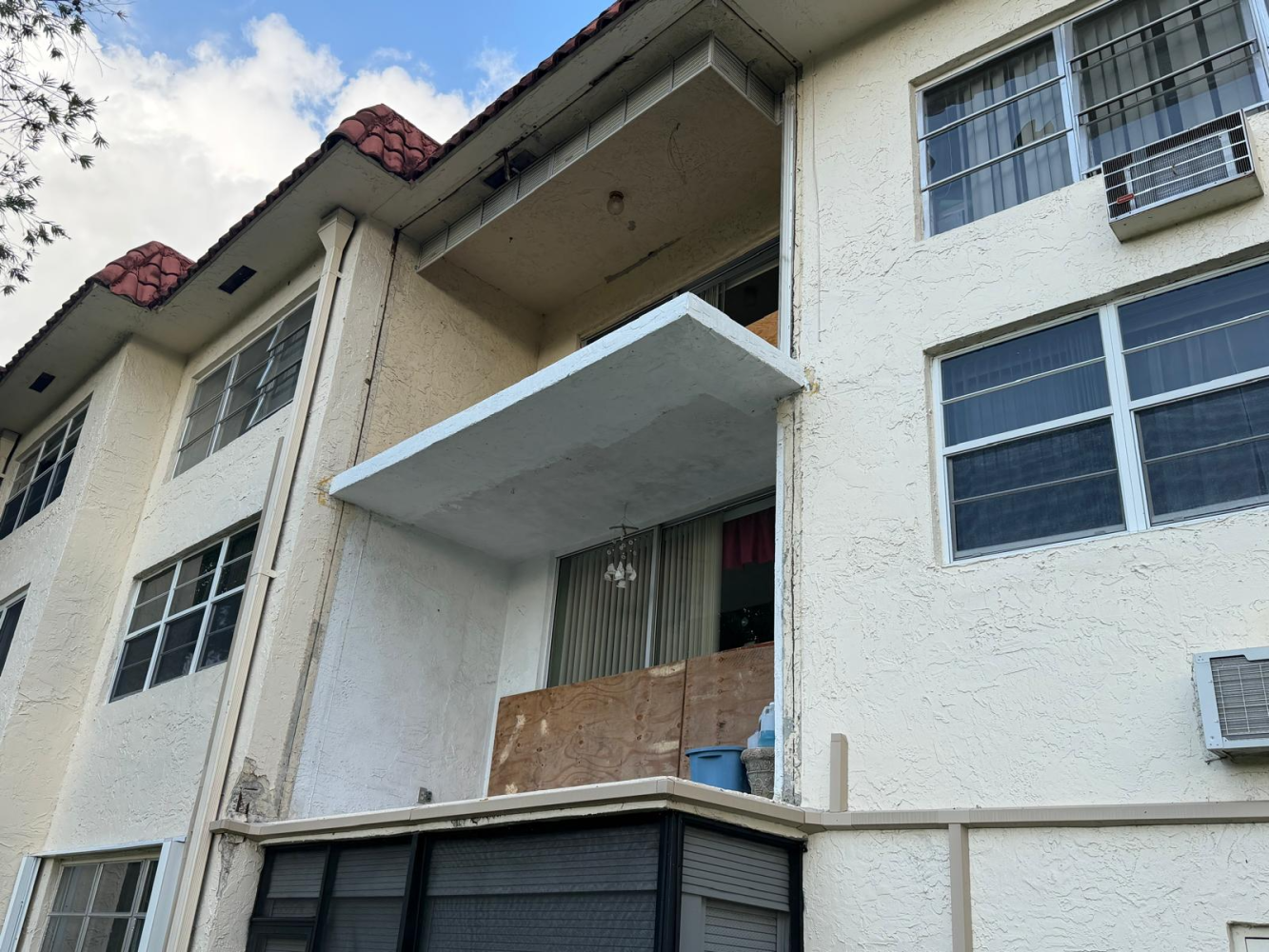
Concrete restoration protects and maintains important building components.
But in an occupied condominium, the project also affects the people who use those spaces every day.
That is why three things should be considered together:
Construction planning
Resident communication
Coordination with property management
For HOA and condominium boards preparing for balcony repair, parking garage restoration or structural concrete repairs in Miami-Dade and South Florida, these considerations deserve attention before construction begins.
A well-prepared building gives both residents and contractors a better starting point.
Up next
Once residents understand what to expect: what should be completed before the contractor begins concrete restoration?
Planning a restoration in an occupied building?
Group Landev works with condominium boards and property managers throughout South Florida to plan concrete restoration around the people who live in the building.
Talk to our teamThis article was originally published on LinkedIn.