
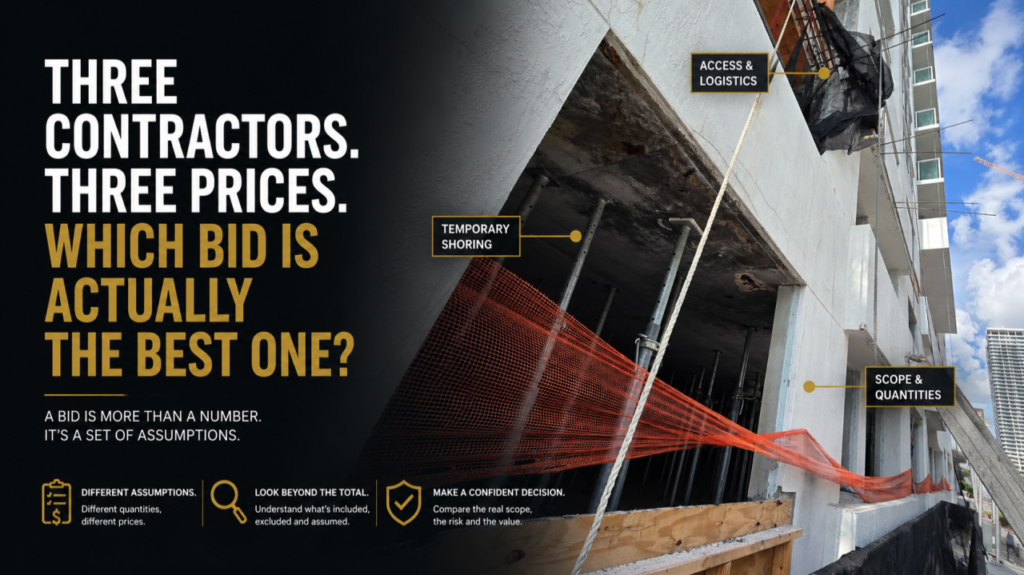
The engineering is complete. The repair documents have been prepared. Three qualified contractors are invited to bid.
Then the proposals arrive.
Contractor A
$1.4M
Contractor B
$1.9M
Contractor C
$2.5M
For a condominium board looking at those numbers, the first question seems obvious:
Why would anyone pay $2.5 million for something another contractor says they can do for $1.4 million?
It’s a reasonable question. But it probably shouldn’t be the first one. A better place to start is:
Are all three contractors actually pricing the same project?
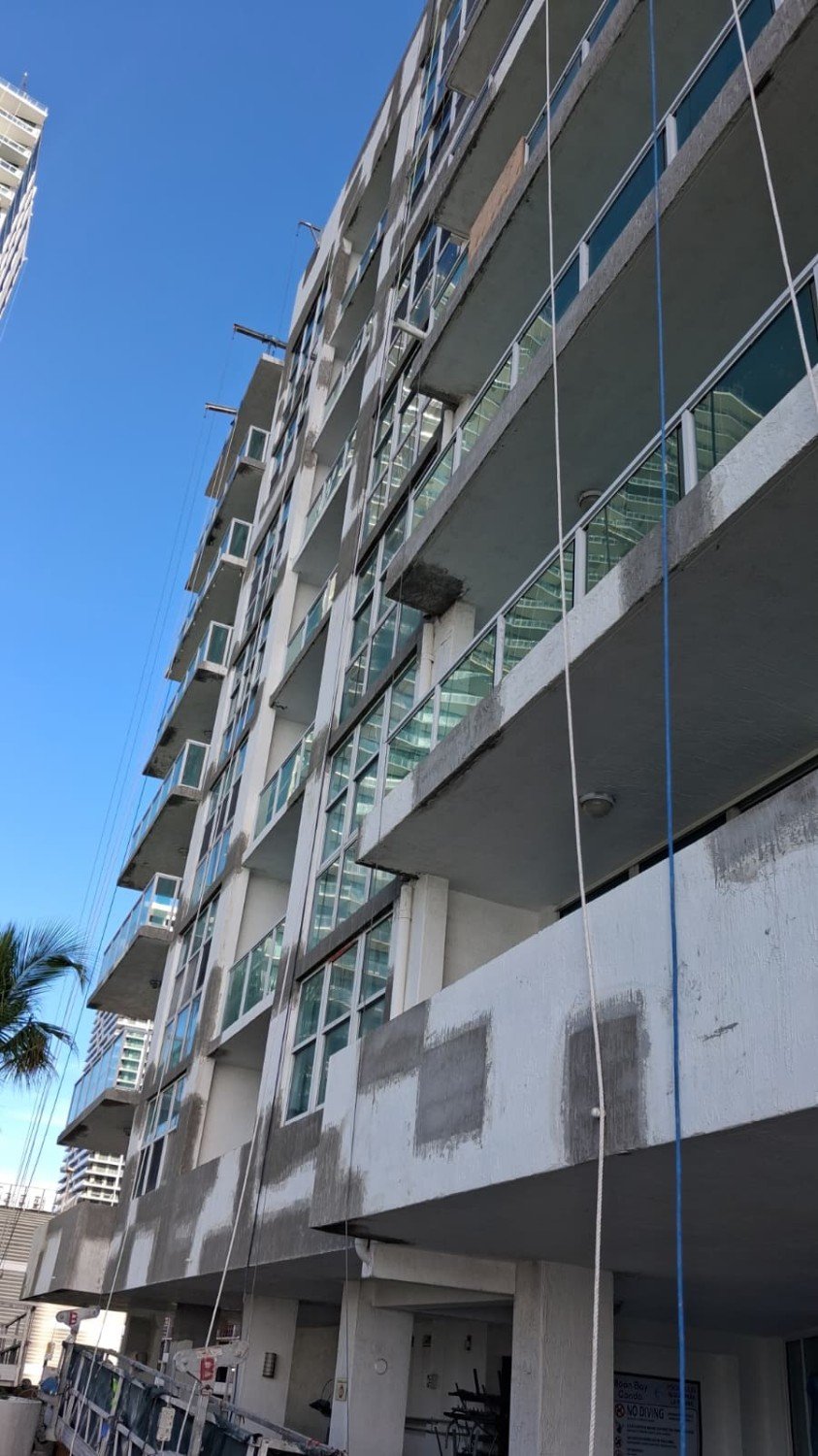
A bid is more than a price
Construction proposals reduce an enormous amount of information into one very visible number. The total.
But underneath that number are dozens of decisions and assumptions.
Hidden behind the total
Two proposals can therefore contain very different interpretations of the same repair documents. And those differences matter.
Consider a simple example
Suppose an engineering assessment identifies concrete deterioration across a parking structure. The estimated repair quantity is approximately 5,000 square feet.
| Quantity | Unit price | Total | |
|---|---|---|---|
| First contractor | 5,000 sq. ft. | $180 | $900,000 |
| Second contractor | 7,000 sq. ft. | $155 | $1,085,000 |
The second contractor appears to be $185,000 more expensive.
But look closer. Their actual unit price is lower.
The difference isn’t primarily the cost of performing the repair.
It’s the quantity they believe will ultimately need to be repaired.
Now imagine demolition begins and the actual repair quantity approaches 7,000 square feet.
The original comparison suddenly looks very different.
This is one of the realities of existing-building restoration.
Engineers can document what they can observe. Demolition reveals more.
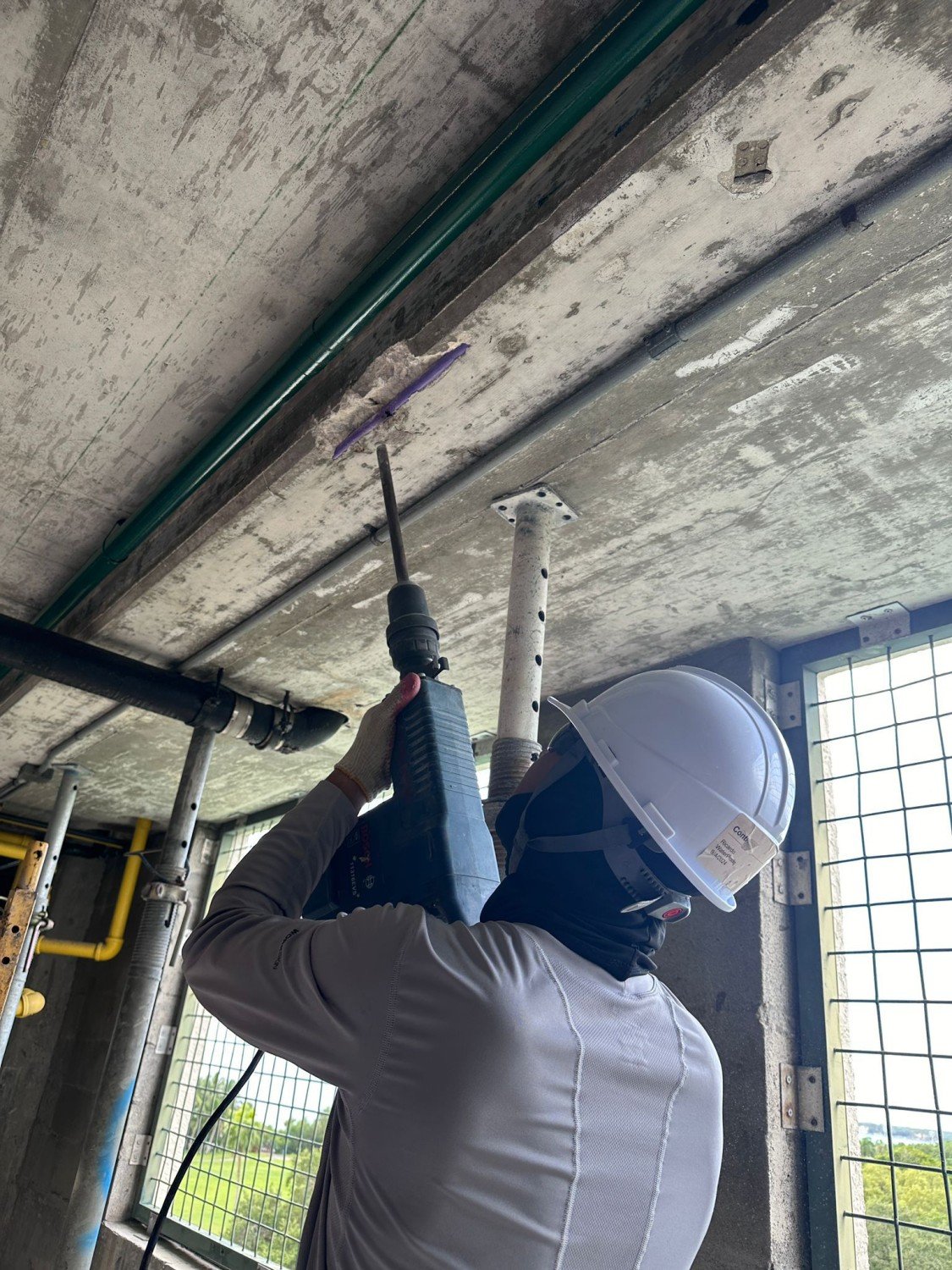
Concrete deterioration does not always respect the boundaries drawn on a repair plan.
An engineer may identify an area through visual inspection, sounding, testing or other investigative methods.
But once demolition begins, deteriorated material has to be removed until acceptable substrate conditions are reached in accordance with the repair design.
Sometimes the boundary stops approximately where expected. Sometimes it continues.
That does not necessarily mean the investigation was inadequate.
There is an inherent limitation to evaluating a material whose internal condition is only partially visible before it is opened.
This is why repair quantities are often one of the most important variables in concrete restoration.
So where does the uncertainty go?
It doesn’t disappear. Someone carries it.
That may be the contractor. It may be the owner. It may be addressed through unit pricing. It may appear as an allowance. It may be addressed through contingency. Or it may eventually appear as a change order.
This is why the lowest initial bid and the lowest final project cost are not necessarily the same thing.
That doesn’t mean a lower bid is suspicious. And it certainly doesn’t mean a higher bid is automatically better.
It means the number needs context.
An exclusion doesn’t eliminate a cost
This is another area where proposal comparisons become difficult.
But if the project ultimately requires those items, their cost hasn’t disappeared.
It simply isn’t contained in the number being compared.
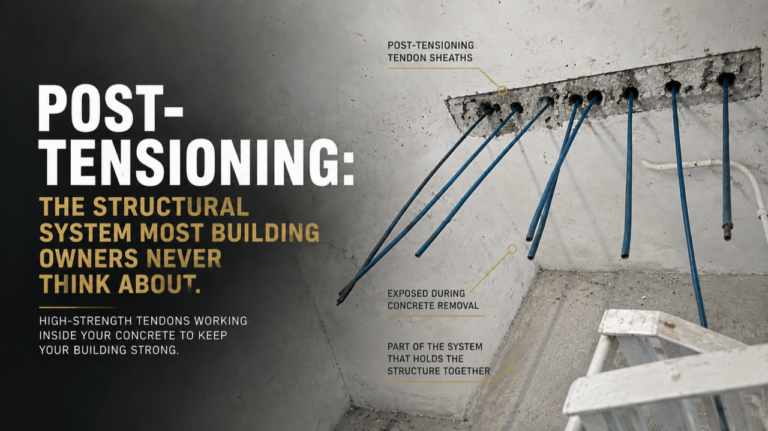
The same can happen with permits, testing, engineering coordination, waterproofing interfaces, painting, traffic management, temporary protection, post-tensioning work and dozens of other project-specific requirements.
This is why comparing only the bottom line can create a false sense of precision. The totals may be accurate. The comparison may not be.
Normalize the bids before comparing them
A more useful comparison puts every proposal onto the same conceptual playing field. Before asking which contractor has the best price, understand:
Scope
Are they including the same work?
Quantities
What quantities does each contractor assume?
Unit prices
What happens financially if those quantities increase or decrease?
Allowances
What has been budgeted without a fully determined final cost?
Exclusions
What will the owner potentially have to purchase separately?
Assumptions
What conditions does the price depend upon?
Access and logistics
Are scaffolding, swing stages, lifts, protection and mobilization treated the same way?
Schedule
Are the contractors proposing comparable durations and sequencing?
Contingency
How is uncertainty being handled?
Change-order exposure
Which assumptions could materially change the final contract value?
Only after those differences are understood does the total price become truly informative.
The most important differences may not be in the total
Imagine two proposals:
Proposal A
$1,400,000
■ Lower initial cost.
■ Several quantities are allowances.
■ Some access costs are excluded.
■ Concrete repair is based on the engineering estimate.
■ Additional deterioration is charged at established unit prices.
Proposal B
$1,550,000
■ Higher initial cost.
■ More access and protection are included.
■ The contractor has carried somewhat higher repair quantities.
■ Several items treated as allowances in Proposal A are included in the base scope.
Which proposal is cheaper? At bid day, the answer is A. At project completion?
There isn’t enough information yet to know. And that is precisely the point.
Risk can be analyzed, even when it cannot be eliminated
Existing-building restoration will always contain unknowns. The objective shouldn’t be to pretend otherwise.
A more useful approach is to identify where those unknowns are concentrated. For each major scope item, ask:
What do we know?
What are we assuming?
What could change?
How likely is it to change?
What would the financial consequence be if it does?
A $20,000 uncertainty with a narrow range of possible outcomes deserves different attention from a $600,000 quantity assumption that cannot be confirmed until demolition.
This creates a much more meaningful picture of the project. Instead of looking only at price, the board begins looking at price plus exposure.
That is a very different conversation.
Unit prices deserve particular attention
The total contract value gets most of the attention during bidding. But on restoration projects, unit prices can become extremely important.
If the contract contains estimated quantities and the actual quantities change, those unit prices may determine what the additional work costs.
A proposal can therefore have an attractive initial total while carrying expensive unit rates for work likely to increase.
The opposite can also happen. A contractor may submit a higher initial total because they anticipate more repair quantity, while offering competitive unit pricing if the actual quantity changes.
Understanding both numbers gives the owner a much better picture than either one alone.
The same principle applies to post-tensioning
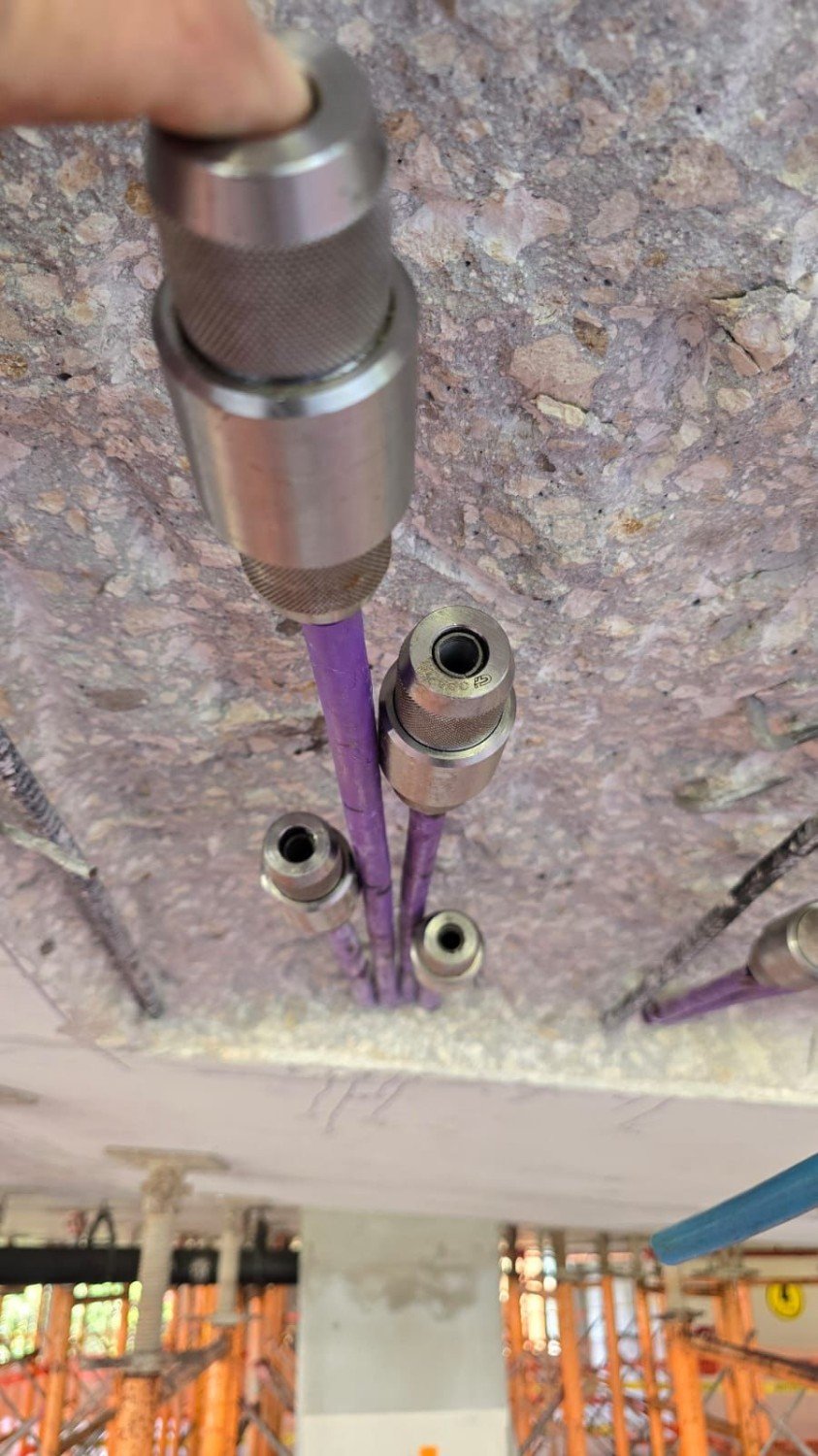
Suppose deterioration is discovered around a post-tensioned structural system.
Contractor 1
May assume localized exposure and repair.
Contractor 2
May anticipate more extensive investigation or tendon work.
Contractor 3
May carry an allowance until the engineer can evaluate conditions after exposure.
Those aren’t simply three different prices. They represent three different assumptions about what the building is going to reveal.
The assumptions need to be understood before the numbers can be fairly compared.
A bid should tell a story
A well-prepared proposal should allow the reader to understand how the contractor arrived at the number.
A well-prepared proposal
That transparency is valuable regardless of which contractor ultimately wins the project.
Because condominium boards aren’t simply choosing a contractor. They are making a financial decision on behalf of an entire building. They need enough information to understand what they’re choosing.
The goal isn’t to find the lowest number
Nor is it to find the highest. It’s to make the proposals comparable.
Once the scope, quantities, assumptions, exclusions, allowances, unit prices and major risks have been normalized, something interesting happens. The differences between the bids begin to explain themselves.
Perhaps one contractor really is less expensive. Perhaps another included substantially more work. Perhaps one identified a risk the others didn’t. Perhaps a large difference comes down to a single quantity assumption. Perhaps all three contractors interpreted one portion of the documents differently.
Those are useful discoveries.
A good bid comparison shouldn’t simply tell a board which contractor is cheapest.
It should tell them why the prices are different.
Once you understand that, the decision becomes much easier to defend.
Comparing restoration bids?
Group Landev works with engineers, property managers and condominium associations throughout South Florida to evaluate restoration scopes, understand project risk and translate engineering requirements into executable construction work.
Talk to our teamThis article was originally published on LinkedIn.